Democrats’ dark horse candidate in 2028
Whoever wins the Democratic nomination, according to Kalshi, has a 68 per cent chance of winning the White House.

Kalshi betting markets in the United States tell us something about the 2028 presidential nominating races that got underway when the midterm election results were announced in early November. After the drubbing President Donald Trump and the GOP took, the chances of a Democratic president succeeding Donald Trump increased dramatically. Whoever wins the Democratic nomination, according to Kalshi, has a 68 per cent chance of winning the White House. Recently re-elected Georgia Senator Jon Ossoff led the pack with a 26 per cent chance of being nominated and an 18 per cent chance of being the next president. The only problem? Ossoff has young children and has expressed some hesitancy about running for an office that will consume two years of his life. At 38, Ossoff could wait a couple of cycles and still be very young. Rumours persist that he would prefer to wait because he doesn’t want to put his family through the rigours of a national campaign.
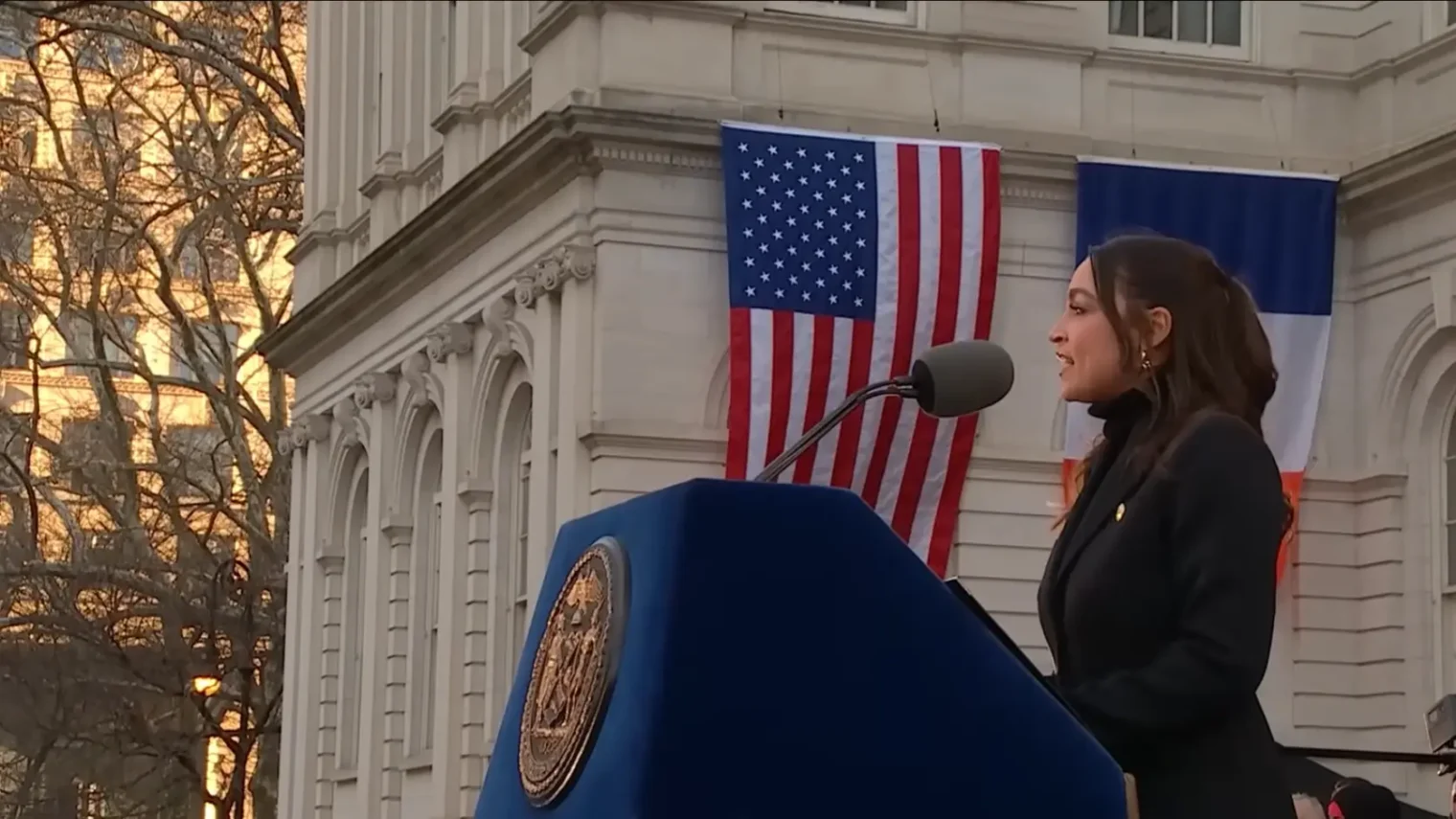
If Ossoff sidesteps the race, or even if he runs, the Democratic Socialist wing of the party, fresh off several victories, will want to run a candidate representing their interests. Many believe the party establishment robbed Bernie Sanders of the nomination in 2016 and 2020. While the Independent Democrat won’t run at age 87, he will want to have a candidate in the race speaking on behalf of his issues and causes. That person could be Congressman Ro Khanna, who represents California’s 17th congressional district. Khanna has pitched an economic agenda focused on universal childcare, Medicare for All, free public college, and managing the artificial intelligence transition for working-class communities. But another Sanders acolyte has caught Kalshi’s interest: the irrepressible Alexandria Ocasio-Cortez (AOC). Representing New York’s 14th Congressional District and entering her 5th term in office, AOC has risen to second place in Kalshi’s markets, standing at a 15 per cent chance of being the nominee. Those numbers may seem fringe, but they aren’t when so many people have expressed a desire to run. She will be the Sanders of this cycle.
Here are three reasons, with one caveat, why she could be the next president.
SANDERS’ SUPPORT
The coalition of Democratic socialists deserves respect. They just pulled off a glorious victory. Running a slate of candidates in various states, the socialists hold office at every level of government except the federal executive. Sanders passed the torch at the rallies he held with AOC leading up to this election. Sanders knows his age and understands that someone has to run from that wing of the party. AOC has not discouraged those who see her as the natural heir to Sanders.
Reading the circumstances pragmatically, AOC has been careful in conversations recently, displaying moderation on a few issues and even indicating a desire to get beyond woke politics. On ABC’s This Week, she was quoted as saying, “Woke 1 was crazy,” adding that the language used during that period was “not rhetoric that we would use today.” The challenge will be to keep some of her teammates from overreaching after their smashing victory. AOC can sound as reasonable as Mr. Rogers of PBS fame, but if the Democratic Party exceeds its mandate and travels down a radical path, she could become associated with crazy left-wing politicians who want to trans the kids, confiscate your wealth, and take away your guns. Rejecting the temptation to indulge in cultural social justice does not mean she has to become an economic moderate. She could remain a champion of progressive priorities like universal healthcare, housing affordability, taxing billionaires, and appealing broadly to working-class voters. If she maintains enough discipline to avoid cultural controversies, Sanders will bless her, Democratic Socialists will support her, and she will captivate voters who want a younger president after two geriatric administrations. Whether she can break through the glass ceiling that held Hillary Clinton and Kamala Harris would be a question of another degree.
"*" indicates required fields
CLEAR PATH
As a progressive, AOC will have a clear path. Moderates like Jon Ossoff, Josh Shapiro, and Andy Beshear will compete for one swath of voters, while AOC can count on an enthusiastic, growing bloc of voters. Whereas the establishment candidates will have to scrap one another for every vote, AOC can count on the Bernie Bros to show up for her and potentially give her the edge in a large field. Grassroots support will also be key. If AOC translates her message and draws the small-donor crowd Sanders attracted, it will give her another leg up on the competition. The right can dismiss her as a lightweight, another kooky left-wing socialist, or a far-out New York leftist, but the country has been coming her way for some time. As she has matured, her appeal has broadened. Her experience in Congress has chipped away at some of her youthful ingenuousness, and a more serious officeholder has emerged. By 2028, AOC will be 39 with 10 years in Congress behind her. America has had candidates with less political experience rise to the presidency. The socialists will demand to be heard. Using the Democratic Party as a vessel for their cause, they hope to nominate someone who will push the Left’s ideals the way populists used the GOP to help Trump speak for them.
TIMING
Waiting for the right time to run comes with its own hazards. Taking the plunge paid great dividends for Barack Obama. After two years in the Senate, he announced his decision at 45. JFK wanted in before he was 40 and became president at 43. Those who have delayed have usually regretted it. Ted Kennedy finally decided in 1980 it was time to run, but he had to knock off a sitting president in his own party. He would have had a clear path in 1976. Chris Christie, a popular candidate in 2012, passed up the opportunity and waited until 2016. Everyone knows how that worked out.
AOC will have to decide whether to jump in, but the divide in the party favours her candidacy and works for her numerically. If Ossoff, Shapiro, and Beshear battle for the mainstream of the party, AOC can win with 35-40 per cent support. A CNN/SSRS poll in the summer revealed the following: “In a survey published by CNN Politics, 33 per cent of Democrats and Democratic-leaning adults reported identifying as democratic socialists. Among this group, the survey found that 59 per cent are under age 45, 57 per cent are White, 66 per cent do not hold a college degree, and 76 per cent earn under $100,000 annually.” These folks would get behind an AOC candidacy, support her from the grassroots, knock on doors, make phone calls, use social media, and vote enthusiastically. She may not have much choice but to go all in.
ONE CAVEAT
Senator Raphael Warnock of Georgia, senior pastor of Martin Luther King Jr.’s former church, Ebenezer Baptist, in Atlanta, holds some cards that many Democratic candidates envy. As a southern senator in a state the Democrats believe they can take back in 2028’s presidential race, Warnock has proven bona fides. As the state’s first Black senator, he would have widespread appeal in South Carolina, Georgia’s next-door neighbour. The Palmetto State will hold the Democrats’ first primary in 2028. If Warnock can ignite momentum, he could throw a wrench into the plans of not only AOC, but others seeking to establish plausibility.
Expect announcements to begin in early 2027. AOC will weigh her options and decide early. She will be a serious contender for the nomination. Anyone writing her off does so at peril. Look for her to make inroads, gain support, and be in the final two or three by early spring of 2028. No one should be surprised with her success, especially readers of this column.
