Liberals continue to implement Century Initiative immigration plan
Regardless of its impact on Canadians, the Carney Liberals are intent to continue their plan to significantly increase Canada’s population through immigration.

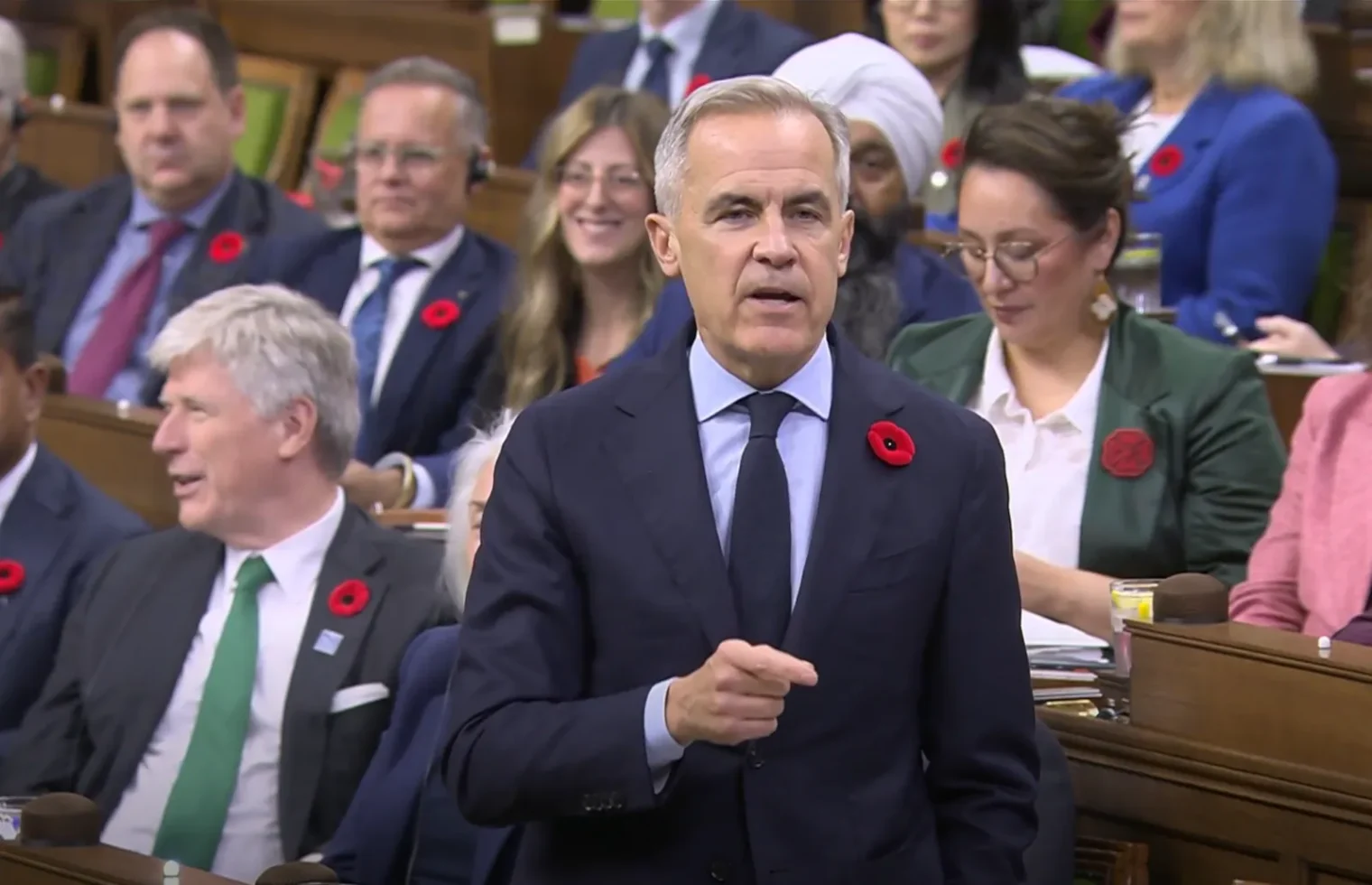
This week Liberal MPs voted down a Conservative motion to lower Canada’s immigration quotas to ensure that the number of newcomers being brought into the country can be adequately absorbed: “That in order to ensure housing, wages, health care, jobs and other social services keep pace with the population growth, the House reject the Prime Minister’s plan to increase permanent immigration next year to the highest levels in history.”
While casting aspersions of racism and anti-immigrant dog-whistle politics, the Liberal MPs voted unanimously to advance the Liberals’ decade-old immigration policy, hatched from two foundational documents originating in the early years of the Trudeau government: the United Nations (UN) Global Compact for Migration and the Liberals’ own Century Initiative plan. Regardless of its impact on Canadians, the Carney Liberals are intent to continue their plan to significantly increase Canada’s population through immigration. The prime minister and his closest advisors are the architects of the policy that would have this country comprised of 100 million Canadians, a majority being immigrants and first-generation Canadians. Let’s consider these documents and Prime Minister Mark Carney’s commitment to the plan.
The UN Global Compact for Migration
After more than a year’s negotiations at the UN supported by Canadian officials, in 2017 member countries signed the UN Global Compact for Migration. This global agenda for resettlement set in place a system for “safe, orderly and regular” migration from third world countries, mostly from the continent of Africa into western countries. Signatories to the Global Compact for Migration document pledged to open their borders to increasing numbers of migrants. (Recall shortly after Canada signed the document former prime minister Justin Trudeau made international headlines tweeting out, “To those fleeing persecution, terror & war, Canadians will welcome you, regardless of your faith. Diversity is our strength.”) The goal is to replace aging populations in western industrialized countries with a labour force from the third world. The UN had been championing this “replacement migration” strategy for decades and it can be traced directly back to a 2000 policy reference document, simply entitled “UN Migration Paper: Replacement Migration.” Today, Canada is recognized by the UN as “the global leader” with its resettlement plans, processing the world’s largest intake of third world refugees (in 2025 Canada took in more than half of the global total).
The Century Initiative
A keystone policy paper for the Liberals’ approach to immigration was written in 2016 by the federal Advisory Council on Economic Growth, which was chaired by Domenic Barton and included Mark Wiseman and Michael Sabia. The council recommended to the government that there be a substantial 50 per cent increase in annual “permanent resident” immigration levels by 2021 and the key policy was for the country’s population to reach 100 million by 2100 – which happens to also be the core policy objective of The Century Initiative, cofounded by the same Dominic Barton and Mark Wiseman.
The Century Initiative push for a 100 million population is active in Ottawa and, in June 2025, the group published a report entitled “The Social and Economic Implications of Reducing Canada’s Immigration Levels in Unstable Times” that argues Canada’s immigration must be maintained at increased levels if the country is to achieve economic growth and prosperity. Many of the arguments found in this report served as government speaking notes in the debates in parliament this week.
The PM’s closest advisors
Canadians may ask how it is that the Carney Liberals are so intent on loosening the immigration laws and finding new ways to increase the numbers of immigrants brought annually into the country. The answer lies in the Prime Minister’s Office (PMO), where Carney’s inner circle of advisers are champions of the UN Global Compact for Migration and the Century Initiative. It is remarkable to see the cross-references. Here are the Liberals’ immigration policy architects and standard bearers:
- Marc-André Blanchard, the prime minister’s chief of staff, was the former representative at the UN in the mid 2010s and the senior Canadian official championing the UN’s migration policies for easier movement of migrants, refugees, and asylum seekers. Blanchard oversaw Canada’s signature on the UN document.
- Dominic Barton is currently Carney’s selection to head the “Invest in Canada” initiative, but in the Trudeau-era had lead roles at McKinsey global consultancy, as Canadian ambassador to China, and Carney’s associate at the Bilderberg Group and the World Economic Forum – and, as mentioned, the cofounder of the Century Initiative and chaired the 2016 Advisory Council.
- Mark Wiseman, formerly senior advisor in Carney’s PMO and currently Canada’s Ambassador to the U.S.; in the 2010s he served as a senior Blackrock’s executive and, again, was cofounder of the Century Initiative and on the 2016 Advisory Council.
- Marco Mendicino, served as Carney’s chief of staff and key advisor on policy; and with the Trudeau government, he served as immigration minister at the time of the signing of the UN document and adoption of the Century Initiative plan. Mendicino was responsible for implementing the Liberals’ open borders policies.
- Michael Sabia is currently the Clerk of the Privy Council and formerly served on the 2016 Advisory Council.
- Lena Diab, Carney’s minister of immigration was the former Nova Scotia minister of immigration recognized for expanding Nova Scotia’s immigration programs, specifically launching “several express entry-aligned and entrepreneur streams” for migrants.
The prime minister himself can also be added to this list of Liberal immigration architects. Carney came to Ottawa in the summer of 2020 to advise the Liberal government on Canada’s economic recovery from the COVID-19 pandemic and lockdowns. It was then that Canadian borders were swung wide open to accept the largest intake of migrants the country has ever known. Starting in 2021, for a period of four years, the Canadian population ballooned with the addition of enough people to populate the greater metro area of Montreal – and then some. In addition to that, Canada welcomed millions of non-permanent residents, foreign workers and students, and many of these migrants remained in the country after their visas expired. So, as the key advisor on Canada’s economy, Carney was championing the same argument used by the UN and the Century Initiative, that economic growth can be effectively achieved with increased immigration. Canadians heard this argument stated multiple times in multiple ways in the immigration debate this week (read the Hansard for Nov. 24, 2026 for all the details).
"*" indicates required fields
After the vote in the House of Commons, Conservative immigration critic MP Michelle Rempel Garner met the media and stated, “Liberals had a chance to stand up for the families waiting for a doctor, a home, and a pay cheque that keeps up. They chose corporate lobbyists instead. I’ll keep fighting.” In the same media conference, Conservative Leader Pierre Poilievre made the more pointed statement, “Carney’s record-smashing immigration increase that will drive wages down, rent up, and profits through the roof.” Poilievre later added on X, “Liberals just voted to ramp up record permanent immigration, putting even more pressure on our jobs, health care, and housing. No one can afford this.”
As a final thought, it is a Canadian source of pride that the country’s history is one written largely by its industrious immigrants who cleared the land, built up our cities, and helped develop a remarkable national identity. But this legacy has been tarnished in the past decade with the Liberal governments of Trudeau and Carney and their myopic pursuit of more than doubling the country’s population to a 100 million people – regardless of what it means for Canadians’ health care, housing, economy, and way of life. As Canadians learned this week, there is no rationale, no facts or arguments, that will move the Liberals’ commitment to bringing into the country hundreds of thousands of migrants in 2027 and, annually, for years to come.
NEXT WEEK: Demographics shape a nation – its politics, economy, and social cohesion – and the data and facts show the Liberals have notably altered what is Canada.